
Middle-clicking a link to open it in a new tab is the most automatic, invisible, destructive habit in modern computing. You do it without thinking. You have done it thousands of times. And every single time, you create a problem you will have to clean up later.
I tracked my own middle-clicks for one week. The numbers were worse than I expected.
I middle-clicked 312 times in one week. I closed 278 of those tabs within 5 minutes. That means 89% of my middle-clicks were for glances, not work. I opened a full tab, loaded a full page, allocated full RAM, and closed it 5 minutes later. That is 278 wasted tabs. 278 wasted processes. 278 times I broke my focus for no reason.
Why We Middle-Click
The habit comes from a reasonable fear: "If I click this link normally, I will lose my current page." You are reading an article. You see a source link. You want to check it. You do not want to lose your place. So you middle-click. The link opens in a new tab. Your original page stays where it is. You feel safe.
But that safety is expensive. Every middle-click creates a new process. Every new process eats 50 to 150MB of RAM. Every new tab adds to the tab bar clutter. And every new tab is a future decision: do I keep this or close it?
Most people do not close the tab immediately. They leave it open "just in case." That 5-minute glance becomes a 3-hour resident. Then a 2-day resident. Then part of the Friday tab purge. The middle-click was supposed to be a quick check. It became a permanent obligation.
What Middle-Clicking Actually Costs
1. RAM
Every tab is a process. A simple blog post uses 80MB. A Google Docs page uses 200MB. A dashboard with live data uses 400MB. Multiply by 30 tabs and you are at 6GB before you open a single work app.
Chrome's Task Manager shows this clearly. Sort by memory. The top entries are almost always tabs you opened "just to check." You are not using them. They are just sitting there, eating RAM, because you middle-clicked instead of previewing.
2. Focus
Gloria Mark's research at UC Irvine found that every context switch costs 23 minutes of focus recovery. When you middle-click, you do not just open a tab. You switch to it. You read the new page. You switch back. Your brain has to unload the new context and reload the old one. That takes time.
If you middle-click 20 times a day, that is 20 context switches. Even if each switch is small, the cumulative cost is hours of lost focus. You are not working less because you are lazy. You are working less because your brain is constantly reloading contexts.
3. Tab Bar Clutter
The tab bar has limited space. At about 12 tabs, titles shrink to favicons. At 20 tabs, you cannot tell what anything is. You click randomly. You lose track. You open duplicates because you cannot find the original.
Middle-clicking is the primary driver of this clutter. Most tabs are not workspaces. They are glances that became residents. The tab bar becomes a graveyard of abandoned curiosity, and middle-clicking is the shovel.
4. The Friday Purge
Almost everyone with a tab problem does the same thing on Friday: they close all their tabs in frustration. They feel guilty. They feel behind. They promise to do better next week. Then Monday comes and they middle-click again.
The Friday purge is not a solution. It is a symptom. And the cause is the middle-click habit that created the mess in the first place.
The Real Problem: Tabs Are the Wrong Tool for Glances
The browser assumes every link is a destination. Click it and you move there. Middle-click it and you open a new destination. But most links are not destinations. They are waypoints. You need to check them, verify them, or read a paragraph. Then you are done.
Using a tab for a glance is like renting an apartment to try a restaurant. You do not need the apartment. You need to look at the menu. The tab is overkill. The preview is the right tool.
The Fix: Preview, Do Not Open
The solution is simple: stop opening tabs for links you only need to glance at. Use a preview tool instead.
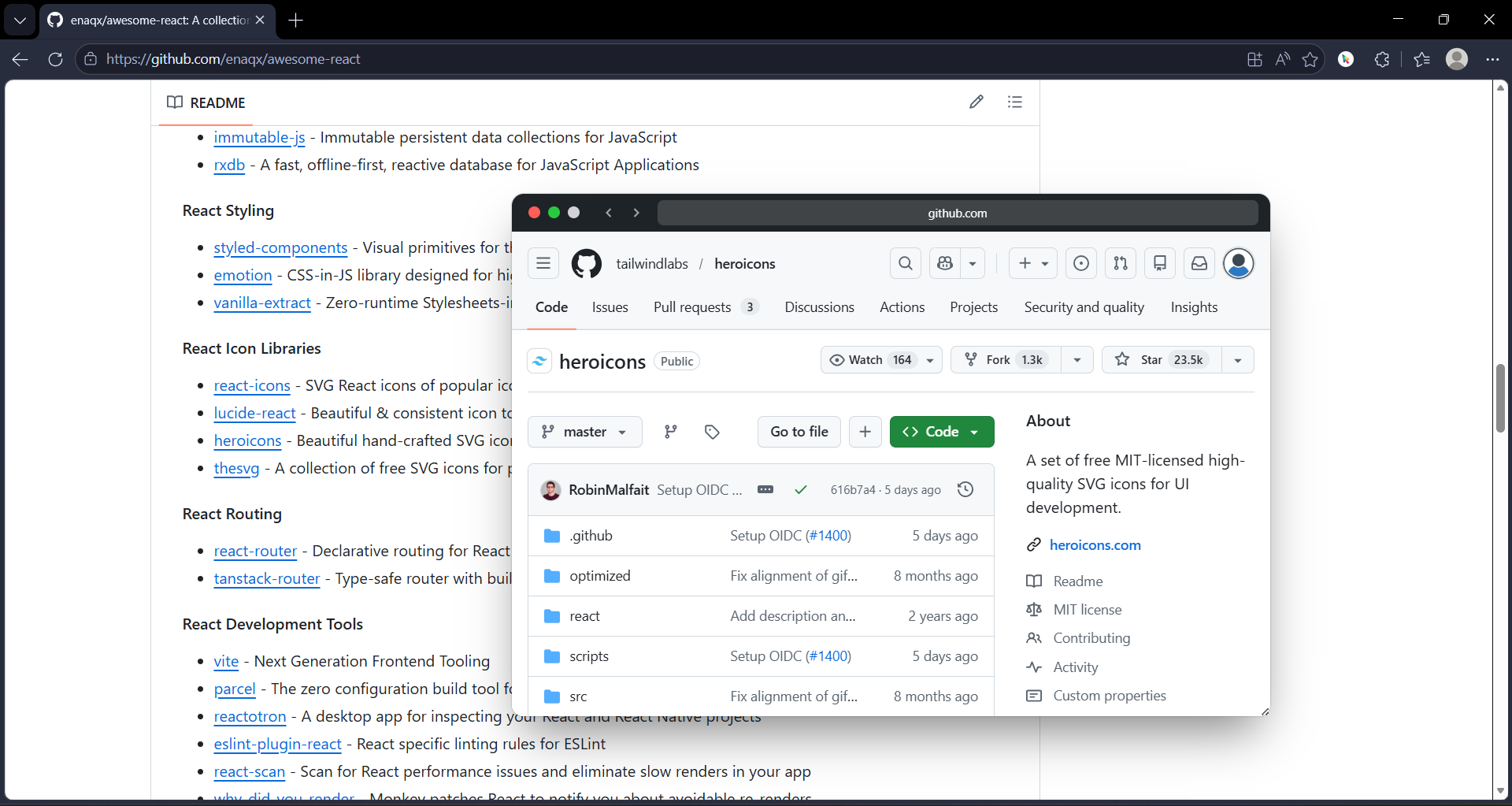
GoPeek does this. Hold Shift and hover over a link. A live preview of the page opens in a floating window. You read what you need. You scroll. You click inside it. When you are done, you close it or it closes automatically. No tab. No RAM. No context switch. No Friday purge.
This changes the default behavior. Instead of "open everything and sort later," you become "preview everything and only open what you actually need." Your tab count drops. Your RAM stays low. Your focus stays intact.
Example: Reading a news article with 8 source links
Old way (middle-click): Middle-click all 8 links. 8 new tabs. Switch to each one. Read for 30 seconds. Close 6 of them. Forget to close 2. Those 2 stay open for 3 days. Total tabs created: 8. Total RAM used: 600MB. Total time lost: 12 minutes of tab switching and cleanup.
New way (preview): Shift-hover each link. Preview opens. Read for 30 seconds. Close it. Move to the next. Total tabs created: 0. Total RAM used: 0. Total time lost: 0.
Breaking the Habit
Middle-clicking is muscle memory. You have done it for 10 to 15 years. You will not stop in one day. But you can replace it.
Install a preview tool. For the first few days, you will still middle-click out of reflex. That is fine. When you catch yourself, close the tab immediately and use the preview instead. After about 3 days, the preview becomes the new reflex. After a week, middle-clicking feels excessive.
The key is making the preview easier than the tab. If the preview is slower or more work, you will revert to middle-clicking. GoPeek opens on Shift-hover with zero clicks. It is faster than middle-clicking. That is why the habit sticks.
When Middle-Clicking Is Still Correct
I am not saying never middle-click. There are valid cases:
- You are opening a page you will work in for the next hour. That deserves a tab.
- You are comparing two pages side by side and need both open simultaneously. That deserves tabs.
- You are filling out a form and need to reference documentation while you type. That deserves a tab.
But these cases are maybe 10% of your link clicks. The other 90% are glances. And for glances, middle-clicking is the wrong tool.
The Bottom Line
Middle-clicking is the worst habit in modern computing because it is invisible, automatic, and expensive. You do it without thinking. You create a full process for a 30-second glance. You clutter your tab bar. You eat your RAM. You break your focus. And you do it 50 times a day.
The fix is not willpower. The fix is changing the tool. Preview links instead of opening them. Make the preview your default. Make the tab the exception. Your browser will run faster. Your Fridays will be cleaner. And your work will get done sooner.