
People treat tabs as free. They are not. Every tab is a process. Every process consumes RAM. Every piece of RAM is a slice of your computer's attention that could be going to the one thing you are actually trying to do.
The average user has 17 tabs open. Power users have 40. Some have 80. And they all say the same thing: "I might need them." You do not need 80 tabs. You do not need 40. You do not need 17. You need 3.
The 3-Tab Rule is simple. You are allowed 3 tabs open at any given time. Not 3 windows. Not 3 groups. 3 tabs. If you want to open a fourth, you close one first. No exceptions. This is not a suggestion. It is a budget. And budgets force decisions.
Why 3?
Cognitive science says most people can hold 3 to 4 items in working memory at once. After that, retention drops. You forget what you were doing. You lose the thread. You context-switch into oblivion.
Three tabs also map to the three things you are usually doing:
- Tab 1: Your workspace — the document, IDE, or tool you are actively working in.
- Tab 2: Your reference — the one source you are currently checking.
- Tab 3: Your communication — email, chat, or a dashboard you need to monitor.
That is it. If you need a second reference, close the first one. If you need a second workspace, finish the first one. If your communication tab becomes a research rabbit hole, close it and open a preview instead.
The Rule in Practice
Here is how a normal work session looks under the 3-Tab Rule.
You are writing a report in Google Docs. That is Tab 1. You need to verify a statistic from a source article. You open the article. That is Tab 2. Your email is open. That is Tab 3. You are at your limit.
The source article links to a study. You want to check it. Under the old rules, you open a fourth tab. Now you have 4 tabs. Then the study links to a dataset. You open a fifth. Then the dataset links to a methodology paper. You open a sixth. Twenty minutes later, you have 12 tabs and you have forgotten what statistic you were verifying.
Under the 3-Tab Rule, you cannot open that fourth tab. You have a choice. You can close the source article and open the study instead. Or you can preview the study with GoPeek — hold Shift, hover the link, read the abstract, close it. No tab. No budget spent. Your 3 tabs stay intact. Your focus stays intact.
The Research Session: With vs. Without the 3-Tab Rule
Without the rule: You start with 3 tabs. You open 4 more "just to check." You now have 7. You group them by color. You name the groups. You reorganize them. You have spent 15 minutes managing tabs and 5 minutes working. Your RAM is at 5GB. Your laptop fan is audible.
With the rule: You start with 3 tabs. A link appears. You preview it with GoPeek. You close the preview. You never exceeded your budget. You spent 0 minutes managing tabs. Your RAM stayed under 1GB. Your fan never turned on.
What Counts as a Tab?
Everything in your browser's tab bar counts. Pinned tabs count. Tab groups count — a group of 5 tabs is 5 tabs, not 1. Background tabs count. Sleeping tabs count, though they cost less. If it appears in your tab bar, it is part of the budget.
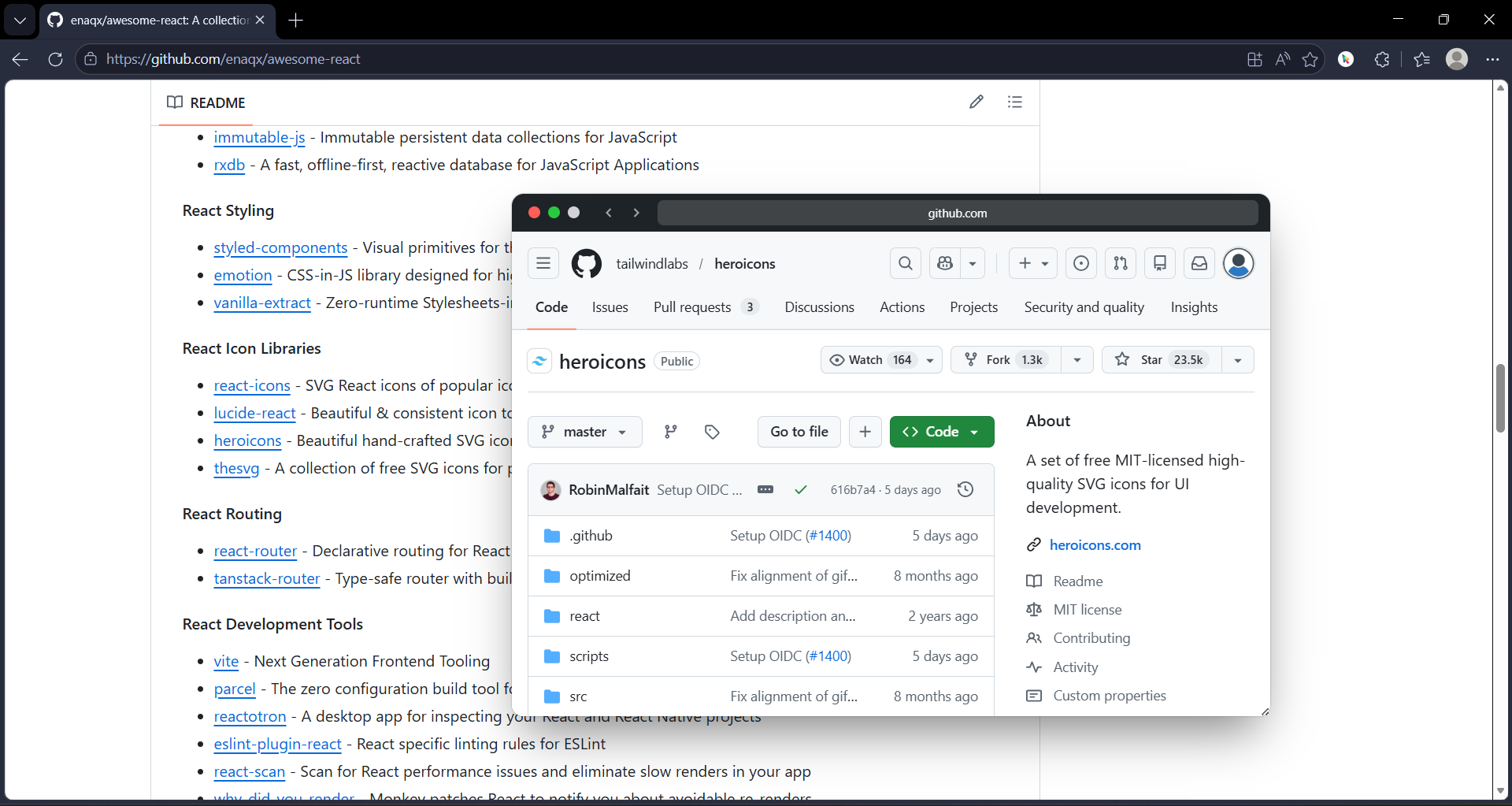
What does not count: GoPeek previews. They are not tabs. They do not appear in your tab bar. They do not consume RAM like a full process. They are glances, not commitments. This is why GoPeek and the 3-Tab Rule are built for each other. The rule creates scarcity. GoPeek removes the pain of scarcity.
The Three Escape Hatches
Sometimes you genuinely need more than 3 sources visible. The 3-Tab Rule has three escape hatches that do not break the budget.
Escape Hatch 1: GoPeek Previews
For anything you need to read but not keep. Hover the link. Preview it. Close it. This covers 80% of the links you currently open as tabs. News articles, blog posts, documentation pages, GitHub repos — all of these are previews, not tabs.
Escape Hatch 2: Bookmarks
For anything you need later but not now. Bookmark it immediately. Put it in the right folder. Close the tab. Your bookmark library is unlimited. Your tab bar is not. Use the right tool for the timeline.
Escape Hatch 3: Sidebar Mode
For the rare case where you need two pages side by side. Drag a GoPeek preview to the edge of your screen. It snaps into a split-screen sidebar. Your original page stays on the left. The preview stays on the right. You can scroll both. You can copy from one and paste into the other. This is not a tab. It is a panel. And it closes when you are done.
The 48-Hour Corollary
The 3-Tab Rule has a corollary: no tab lives longer than 48 hours. If a tab has been open for two days and you have not interacted with it, it is not a workspace. It is a bookmark that is too proud to admit it. Close it or save it. There is no third option.
This prevents the slow creep. You start Monday with 3 tabs. By Wednesday, you have 8 because you "needed to check something quickly." By Friday, you have 20 and the rule is dead. The 48-hour corollary is the enforcement mechanism. It keeps the rule honest.
Head-to-Head: Unlimited Tabs vs. The 3-Tab Rule
| Metric | Unlimited Tabs | 3-Tab Rule + GoPeek |
|---|---|---|
| RAM usage | 4-8GB common | Under 1GB |
| Context switching | Constant — Alt-Tab hell | Minimal — stay on your page |
| Focus recovery | 23 minutes per switch | No recovery needed |
| Tab management time | 15-30 min/day | Zero |
| Browser crashes | Common at 30+ tabs | Rare |
| Decision fatigue | High — which tab was I on? | Low — only 3 to track |
| Research depth | Shallow — many tabs, little reading | Deep — preview, decide, move on |
| End of day | Tab bankruptcy — close 40 tabs | Close 3 tabs — done in 10 seconds |
Why Scarcity Works
Unlimited tabs create unlimited options. Unlimited options create paralysis. When you can open anything, you open everything. When you can only open 3 things, you choose carefully.
The 3-Tab Rule forces you to answer one question before every click: "Is this worth a tab?" Most of the time, the answer is no. The link is a curiosity. The page is a reference. The article is a maybe. None of them deserve a tab. They deserve a preview or a bookmark.
This is the difference between a library and a landfill. Bookmarks are a library — curated, searchable, permanent. Tabs are a landfill — temporary, messy, and overflowing. The 3-Tab Rule turns your browser into a workspace and your bookmark library into storage. Everything else is handled by GoPeek at the door.
Getting Started
You do not need to reorganize your life. You just need to close your tabs. Here is the startup sequence:
- Step 1: Close every tab except the 3 you need right now. Be brutal. If you are not actively using it today, close it.
- Step 2: Install GoPeek. It is your overdraft protection for the 3-Tab budget.
- Step 3: For the next 48 hours, do not open a fourth tab. Preview everything else. Bookmark what matters. Close what does not.
- Step 4: At the end of day two, assess. Your RAM usage is lower. Your focus is sharper. Your tab bar is empty. Decide if you are going back.
Most people do not go back. Once you have tasted a clean tab bar, 40 tabs feels like hoarding. Because it is.
The Bottom Line
The 3-Tab Rule is not minimalism for its own sake. It is minimalism because your brain and your computer have hard limits. You cannot track 40 tabs. You cannot run 40 processes smoothly. You cannot context-switch 40 times and still think clearly.
Three tabs is enough. One for your work. One for your reference. One for your communication. Everything else is a preview, a bookmark, or a distraction. Treat your RAM like a budget. Spend it on what matters. Save the rest. And use GoPeek as your debit card — instant access, no debt, no interest.