Let us cut to the chase. Every time you open a new tab to check a link, you are not just losing the 3 seconds it takes to load. You are losing 23 minutes.
That is not hyperbole. That is the finding from Dr. Gloria Mark's research at the University of California, Irvine — the most cited study on workplace interruptions. After you switch contexts, it takes an average of 23 minutes and 15 seconds to fully regain deep focus on your original task.
And here is the kicker: most of us do this dozens of times per day without realizing it. Click a link. New tab. Read. Close. Back to work. Repeat. Each cycle feels harmless. But the math is brutal.
The Real Cost of a "Quick" Tab
Let us break down what actually happens when you open a new tab:
So far, 20 seconds. No big deal. But then:
That "quick check" just cost you 23 minutes and 37 seconds of productive time. Not 20 seconds. Twenty-three minutes. Because your brain does not switch back instantly. It has to reload the entire mental model of what you were doing — the context, the variables, the thread of thought.
The Math: A Typical Research Session
Let us say you are researching an article, a product, or a code problem. In one 60-minute session, how many links do you check? Let us be conservative: 15 links.
| Metric | Opening New Tabs | Using GoPeek |
|---|---|---|
| Time per link | ~20s load + read + close | ~3s hover + glance |
| Focus recovery per link | 23 minutes | ~0 (no context switch) |
| Links checked per hour | ~15 (before focus collapses) | ~40+ (no recovery needed) |
| Actual productive time | ~11 minutes / hour | ~55 minutes / hour |
| Focus quality by end of hour | Fragmented, stressed | Sustained, deep |
With new tabs, 15 links × 23 minutes = 345 minutes of lost focus time. But your session was only 60 minutes. How is that possible? Because the losses overlap and compound. By link #5, you are already operating at reduced capacity. By link #10, you are barely focused at all. By link #15, you are just clicking randomly and hoping something sticks.
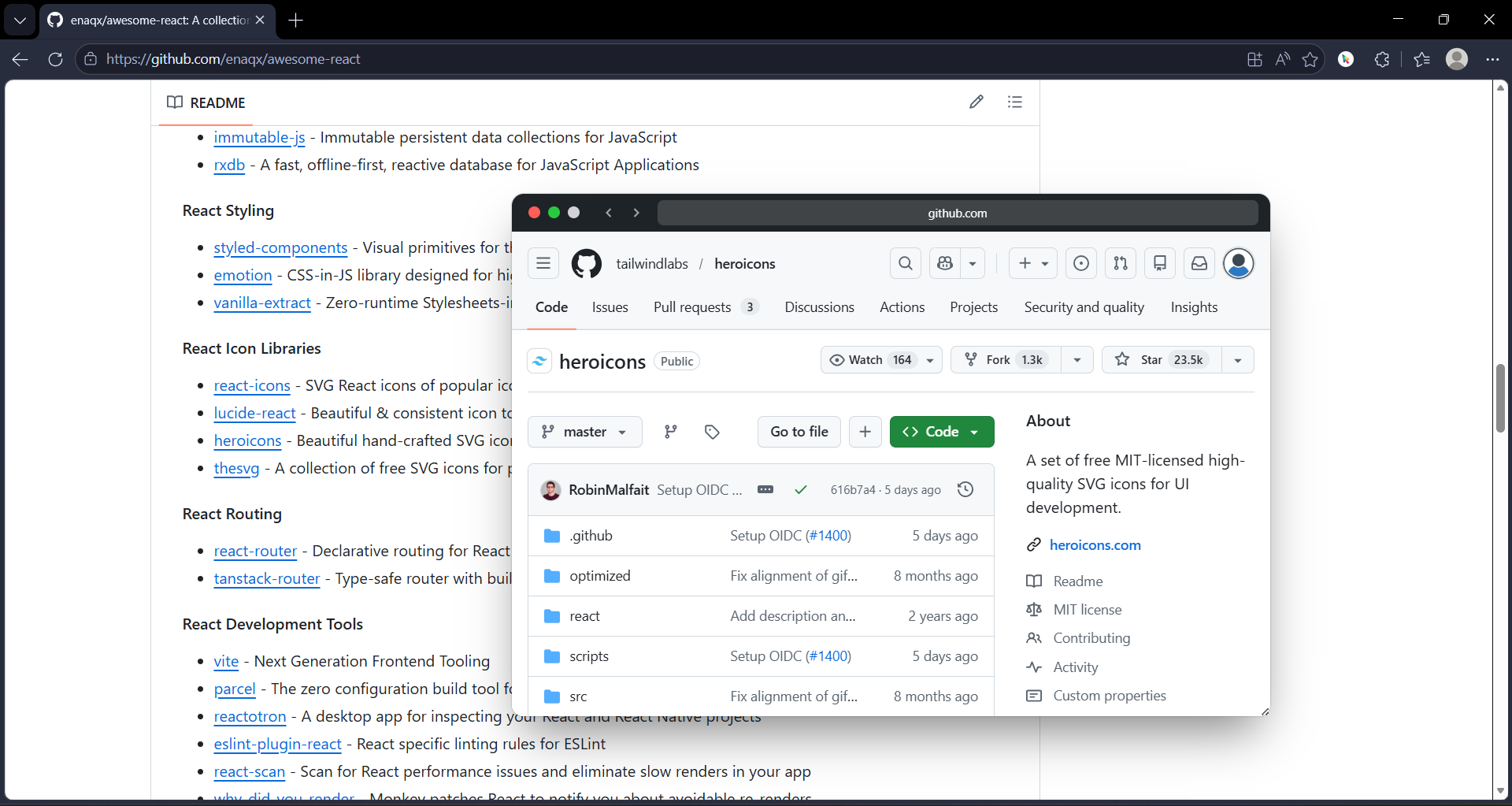
With GoPeek, you hover, glance, and move on. No new tab. No context switch. No 23-minute recovery. Your brain stays in the same mental model the entire hour.
The Weekly Math
Let us scale this up. The average knowledge worker checks 50+ links per day during research, email, Slack, and general browsing.
That is not a typo. If you open 50 tabs a day, you are losing 19 hours of focus time per week to context switching alone. In a 40-hour work week, that means you are only truly productive for about 21 hours. The rest is recovery.
GoPeek does not just save you the 3 seconds per click. It saves you the 23 minutes per click of cognitive recovery. That is the real math.
But Wait — I Multitask. I Am Different.
No, you are not. The research is clear: nobody multitasks effectively. What feels like multitasking is actually rapid context switching — and it is worse than deliberate switching because your brain never fully loads either context.
Studies show that frequent task-switchers:
- Make 50% more errors on complex work
- Take 40% longer to complete the same tasks
- Report higher stress and frustration levels
- Experience attention residue — part of your focus stays on the previous task even after switching
The "I am good at multitasking" myth is exactly that — a myth. Your brain has one prefrontal cortex. It can hold approximately 7 items in working memory. Every tab switch forces it to flush and reload. There is no hack around biology.
GoPeek: The Math on the Other Side
Here is how GoPeek changes the equation:
With New Tabs (1 hour of research)
15 links checked
15 × 23 min focus recovery = 345 minutes lost
Actual deep work: ~11 minutes
With GoPeek (1 hour of research)
40+ links previewed
0 context switches = 0 minutes lost
Actual deep work: ~55 minutes
The difference is not incremental. It is transformative. GoPeek does not make you 10% more productive. It makes you 5x more productive during research sessions by preserving the one resource you cannot buy more of: uninterrupted focus.
The Memory Cost
There is another cost we have not talked about: RAM. Every tab you open consumes 50-300MB of memory. Twenty tabs = 4-6GB. Forty tabs = 8-12GB. On an 8GB laptop, that means your browser is eating all available memory, forcing the OS to swap to disk, making everything slower.
GoPeek previews are lightweight. They use a fraction of the memory of a full tab because they are rendered as overlays, not independent processes. Your computer stays fast. Your browser stays responsive. Your fan stays quiet.
The Decision Fatigue Cost
Every tab is a decision waiting to happen: Keep or close? Read now or later? Bookmark or forget? Psychologists call this decision fatigue — the deteriorating quality of decisions after making many of them. By the end of a 30-tab session, your willpower is depleted. You keep tabs open "just in case" because you no longer have the mental energy to decide.
GoPeek removes the decision entirely. Preview, decide, move on. No tab to manage. No "later" pile. No guilt about closing something you might need. The preview appears when you need it and disappears when you do not.
The Bottom Line
Let us put it all together. In a typical work week:
| Cost Category | New Tabs | GoPeek |
|---|---|---|
| Focus recovery (50 links/day) | 19+ hours/week | 0 hours |
| Tab load time | ~25 min/week | ~4 min/week |
| Tab management / cleanup | ~30 min/week | 0 min |
| Decision fatigue | High | None |
| RAM usage (20 tabs) | 4-6 GB | ~500 MB |
| Weekly time saved | — | ~20 hours |
20 hours per week. That is half a work week. That is the real cost of opening new tabs. And that is the real value of GoPeek — not the 3 seconds per click, but the 23 minutes of focus you keep.